
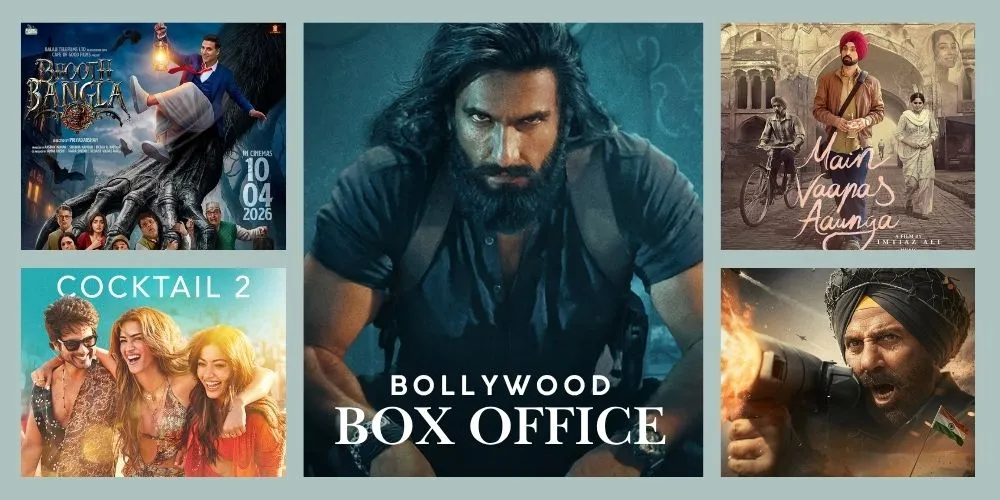
As the calendar turns to July, the Indian film industry finds itself reflecting on a first half (H1) of 2026 that has been defined by extreme polarization. The Bollywood box office narrative between January 1 and June 30 has been a story of “the few and the many”—where a handful of colossal spectacles shattered all-time records, while a significant volume of theatrical releases struggled to find a foothold.
Trade analysts have characterized the last six months as a “patchy but promising” period. While overall box office collections have seen a healthy 10–15% uptick compared to the same period in 2025, the industry’s reliance on a select few blockbusters has become more pronounced than ever.
The defining narrative of 2026 thus far has been the meteoric rise of the nationalistic espionage thriller Dhurandhar: The Revenge. Emerging as an unprecedented cultural phenomenon, the film reportedly amassed over ₹1,800 crore worldwide, effectively shattering the existing “glass ceiling” for Hindi cinema’s earning potential.
Following in the wake of such dominance, the highly anticipated war epic Border 2 secured a massive ₹450 crore-plus finish, reaffirming the enduring mass appeal of patriotic action dramas. Rounding out the top three is the horror-comedy Bhooth Bangla, which proved that the genre remains a safe and lucrative bet, earning over ₹270 crore.
Beyond the top trio, other films crossed the crucial ₹100-crore milestone, including Cocktail 2, Welcome To The Jungle and Raja Shivaji. These successes underscored a critical industry trend: when a film connects with the collective consciousness, the Indian audience is willing to show up in droves.
While the highs were record-breaking, the lows were equally stark. Industry reports indicate that over 25 films underperformed during this six-month window, with a significant number failing to breach the ₹10-crore mark.
Notable theatrical disappointments included: Ginny Weds Sunny 2, Ikkis, Aakhri Sawal, Ek Din, Bandar, Governor, Tu Yaa Main, Bharat Bhagya Viddhaata and more.
Many of these films, despite promotional efforts, vanished from screens within the first week. Analysts point to a changing viewer dynamic: audiences are no longer blinded by star power alone. Films like Main Vaapas Aaunga, which had a slow start in June, gained significant momentum solely through strong word-of-mouth—a testament to the fact that content-led storytelling is effectively replacing the “star-driven opening” model.
The first half of the year saw several shifts in how the Hindi box office operates:
- The Content Reset: Audiences have become increasingly discerning. The gap between films that work and those that do not has widened, with mid-range content films often settling for “average” verdicts unless they possess a unique hook.
- The April Lull: The theatrical momentum experienced a predictable slowdown between April and May due to a combination of the IPL season and national elections. Major studios consciously shifted release dates, leading to a quieter period for the exhibition sector.
- Sequel Power: Franchise titles continue to enjoy high audience trust. The continued success of Border 2, and Cocktail 2 highlights that legacy IP remains the safest investment in an increasingly uncertain theatrical landscape.
- Regional Resonance: While Bollywood dominated the domestic share (approx. 50%), regional cinema—particularly the Telugu and Malayalam industries—continued to contribute significant hits, with films like Peddi and Drishyam 3 adding substantial value to the national box office total.
As the Bollywood moves into the second half of 2026, the mood is one of cautious optimism. The slate for the upcoming months is arguably more “stacked” than the first half, featuring high-profile titles such as Alpha, King, Ramayana: Part 1, Dhamaal 4, Awarapan 2, Batwara 1947, Mirzapur, Drishyam 3 and Toxic.
The primary challenge for Bollywood in the coming months will be consistency. With the “blockbuster beast” model proved to be sustainable, the industry now needs to ensure that the middle tier of films—those that are not massive epics but still require theatrical support—can find their audience. For now, the verdict remains clear: 2026 is a year of big numbers, provided the content can match the scale.