
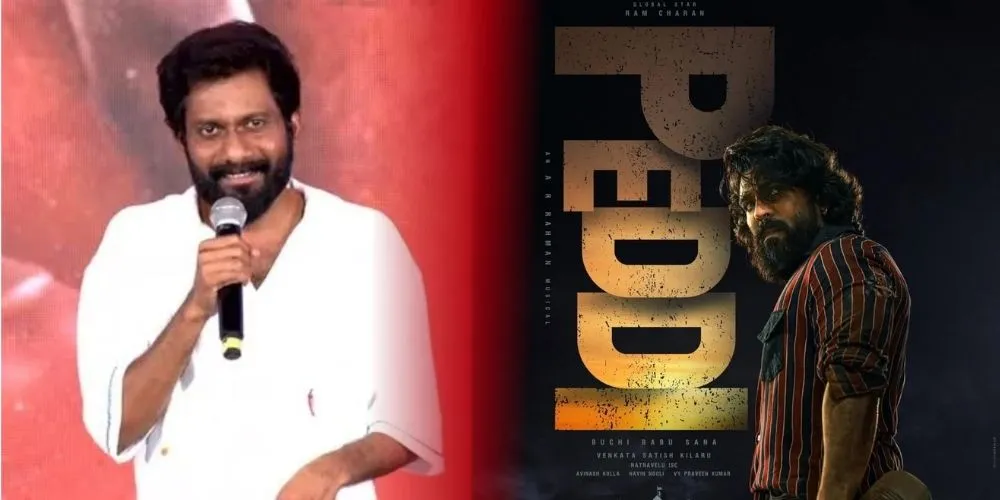
In a swift response to growing public criticism, filmmaker Buchi Babu Sana has officially issued a public apology regarding his latest cinematic release, Peddi. The film, which features superstars Ram Charan and Janhvi Kapoor, hit theaters on June 4, 2026, and immediately became the subject of intense debate regarding the treatment of female characters and the portrayal of consent.
The controversy centers on specific sequences that viewers have flagged as instances of sexual objectification and the glorification of non-consensual behaviour under the guise of a “romantic track.” With social media discourse intensifying over the past 48 hours, the director has chosen to address the grievances head-on.
Taking to the social media platform X (formerly Twitter) on June 6—just two days after the film’s widespread theatrical opening—Buchi Babu Sana expressed his regret for the discomfort caused by the film’s narrative choices.
“As a filmmaker, I believe cinema should entertain, inspire, and connect with audiences. It should never make anyone feel uncomfortable or disrespected,” the director wrote in his formal statement. Acknowledging the weight of the feedback, he confirmed that his production team had thoroughly reviewed the contentious scenes. He explicitly pledged to rectify the situation by announcing that changes would be made to the specific portions of the film that have drawn objections.
As a filmmaker, I believe cinema should entertain, inspire, and connect with audiences. It should never make anyone feel uncomfortable or disrespected. We have heard the feedback regarding certain scenes in Peddi and have taken it seriously.
I have always had immense respect for…
— BuchiBabuSana (@BuchiBabuSana) June 6, 2026
The backlash against Peddi began shortly after the first screenings concluded. While audiences were initially drawn to the film due to the star power of Ram Charan and the debut pairing with Janhvi Kapoor, the reception quickly shifted toward critique.
A significant point of contention involves the romantic track between the lead characters. Several viewers and film critics pointed out scenes that appeared to portray pushy, non-consensual behaviour as standard romantic tropes. This sparked a broader conversation online about the responsibility of mainstream cinema in perpetuating harmful gender dynamics. Many netizens argued that in an era of evolving cinematic sensitivity, such portrayals of women—where their autonomy is sidelined for the sake of the hero’s “pursuit”—are no longer acceptable.
In his statement, Buchi Babu Sana was quick to clarify that there was no malicious intent behind the scenes that have sparked the outrage. He emphasized his personal values, asserting that he holds the utmost respect for women, both in his professional environment and his personal life.
“I have always had immense respect for women, both on and off screen, and it was never our intention to objectify or disrespect any female character,” he stated. He maintained that if parts of the film were perceived as objectifying, the team respects the sentiments of the audience and fully understands the concerns regarding the portrayal of female characters. By choosing to apologize rather than defend the artistic choices, the director has signalled a willingness to listen to the contemporary audience, a rare move in the fast-paced world of big-budget commercial filmmaking.
Peddi was marketed as one of the most anticipated films of the year, bringing together a massive ensemble cast. Aside from the leads, the film features an impressive lineup of talent, including Divyendu Sharma, Jagapathi Babu and Shiva Rajkumar.
The high-profile nature of the film, coupled with the director’s track record for high-stakes storytelling, meant that the scrutiny on Peddi was always going to be intense. The prompt apology suggests that the producers are keen to protect the film’s reputation and ensure that the audience’s experience remains positive.
The incident serves as a significant case study in the power of digital-age feedback. Within hours of the film’s release, social media platforms were flooded with critical takes that pushed the production team into a defensive and reflective position. The decision to edit a film already running in theaters indicates a major shift in how filmmakers engage with their audience.
As the industry watches to see how the re-edited portions of Peddi are integrated and how the audience reacts to these changes, the message remains clear: the modern viewer is increasingly vocal about the representation of gender, and filmmakers are finding it necessary to be more accountable than ever before.
The team behind Peddi is currently working to implement the promised changes, and fans are eagerly waiting to see how these adjustments will affect the narrative flow of the final cut.