
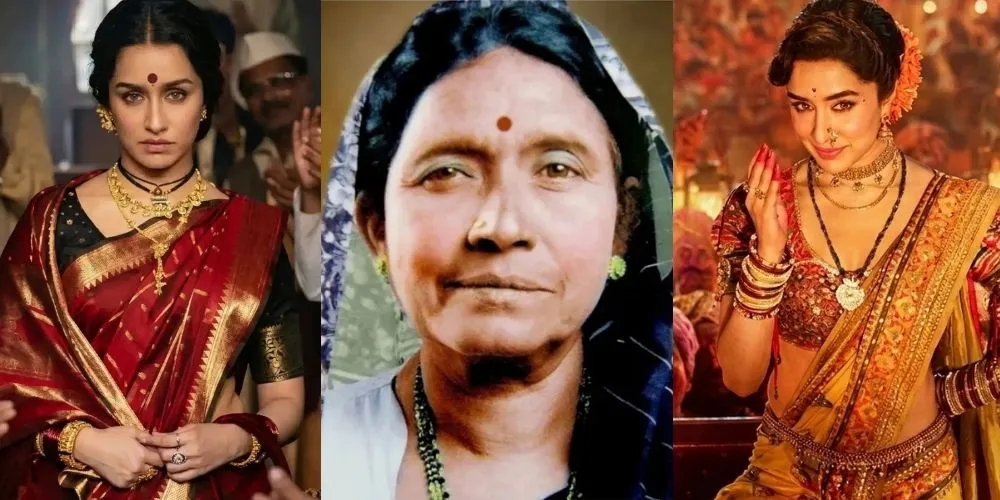
The recent teaser release of Maddock Films‘ upcoming biographical drama Eetha has ignited massive curiosity across India. The film showcases a jaw-dropping transformation of Bollywood diva Shraddha Kapoor, who steps into the shoes of a fiercely dedicated artist performing on stage while heavily pregnant. While Kapoor’s performance promises a cinematic tour de force, the real-world inspiration behind the movie is an extraordinary cultural icon whose life story remains one of the most powerful sagas in Indian art history: Vithabai Narayangaonkar.
Hailed universally as the “Tamasha Samradini” (the Empress of Tamasha), Vithabai did not merely perform art; she lived it, defended it, and revolutionized it. She broke societal shackles to elevate Marathi folk theater into a highly respected art form, leaving behind a legacy of unparalleled grit.
Born in July 1935 into a family of traditional artists in the small town of Narayangaon in Pune district, Maharashtra, Vithabai inherited the rich rhythm of folk music in her blood. She belonged to the Kolhati community, a group deeply intertwined with the traditional performing arts of Tamasha and Lavani.
From a tender age, Vithabai trained under her father, Bhau Mang Narayangaonkar, and her uncle. By the time she turned ten, she had already mastered the complex footwork, facial expressions, and high-pitched vocal delivery required for Tamasha. The stage became her home. Alongside her family, she travelled from village to village on bullock carts, performing under open skies and makeshift tents, honing a craft that would soon captivate the entire state of Maharashtra.
Vithabai’s life was defined by an unyielding devotion to her audience and her troupe. The most famous incident of her career—which serves as the dramatic anchor of the film Eetha—occurred during a live performance in the 1950s.
Vithabai was nine months pregnant and headlining a major Tamasha show. In the middle of her high-energy dance routine, she went into labour. Rather than halting the performance and risking the livelihood of her entire troupe, Vithabai quietly stepped behind the stage curtains. Entirely on her own, she gave birth to her child, cut the umbilical cord with a stone, wrapped the newborn in a cloth, and walked right back onto the stage to finish the performance.
This staggering act of resilience stunned the audience and became a legendary folklore in Maharashtra, cementing her reputation as an artist who placed her duty to her art above her own physical limitations.
During the mid-20th century, folk arts like Tamasha and Lavani faced immense social stigma. Society frequently looked down upon female folk artists, viewing the art form as vulgar or low-brow. Vithabai single-handedly fought to change this perception.
Through her troupe, the Vithabai Narayangaonkar Tamasha Mandal, she infused the performances with deep emotional narratives, historical stories, and social messages. Her impeccable grace, sharp wit during spontaneous poetic exchanges (Sawal-Jawab), and powerful stage presence demanded respect. She attracted massive crowds, drawing everyone from poor farmers to prominent politicians and intellectuals. Her efforts successfully elevated Tamasha from a rural pastime to a celebrated, mainstream cultural treasure of Maharashtra.
Vithabai’s contribution to Indian culture did not go unnoticed. Her legendary artistry earned her national and international acclaim:
- Presidential Honor: In 1990, the President of India presented her with the prestigious Sangeet Natak Akademi Award, acknowledging her lifelong dedication to traditional Indian folk theater.
- State Recognition: The Government of Maharashtra recognized her immense contributions by frequently consulting her on the welfare of folk artists.
To ensure her name inspires future generations, the state government later instituted the yearly “Vithabai Narayangaonkar Lifetime Achievement Award,” which honors outstanding senior folk artists who keep Maharashtra’s traditional heritage alive.
Vithabai Narayangaonkar breathed her last in 2002 after facing severe financial and health struggles in her final years—a poignant reminder of the hardships that traditional artists often endure despite their immense fame. However, the flame she lit continues to burn bright. Her children and grandchildren continue to perform and run the family troupe, keeping the legacy of the Tamasha Samradini active in rural heartlands.
As director Laxman Utekar brings her life to global screens this August, audiences will finally look past the glamour of Bollywood to discover the story of a real-life warrior woman. Vithabai Narayangaonkar was a woman who danced through pain, fought societal prejudice with her art, and conquered the hearts of millions.