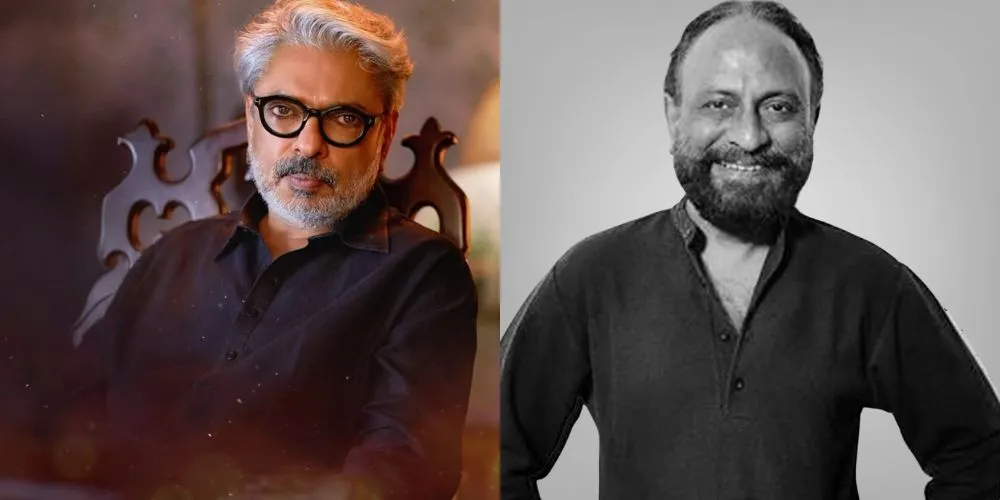
In a landmark announcement for Indian cinema, two of the nation’s most visionary filmmakers have joined forces to bring a seminal chapter of Indian civilization to the big screen. On February 15, 2026, coinciding with the auspicious festival of Maha Shivratri, auteur Sanjay Leela Bhansali and National Award-winning director Ketan Mehta officially unveiled the first-look poster of their upcoming historical epic, Jai Somnath.
The film serves as a grand retelling of the resilience of the Somnath Temple in Gujarat, specifically focusing on the events of 1025–1026 CE. Produced under the banners of Bhansali Productions and Maya Movies, the project marks the first collaboration between these two titans of storytelling.
The timing of the announcement carries profound historical weight. The year 2026 marks exactly 1,000 years since the fateful invasion by Mahmud of Ghazni, who attacked and plundered the Somnath Temple in 1025–1026 CE. The film aims to document this defining chapter, not merely as a tragedy of destruction, but as a testament to the indestructible spirit of India and the subsequent resurrection of its cultural pride.
According to the official press note, Jai Somnath will explore the “victory of creation over destruction.” The temple of Somnath has long stood as a symbol of faith that refuses to crumble, having survived multiple invasions and reconstructions over the centuries. By focusing on the 11th-century siege, the film promises to highlight the bravery of those who defended the land and the faith that rebuilt the shrine time and again.
What makes Jai Somnath an industry-altering project is the unique synergy between its creators.
- Sanjay Leela Bhansali, celebrated for his visually opulent world-building and operatic staging in hits like Padmaavat and Bajirao Mastani, serves as the film’s presenter and producer.
- Ketan Mehta, the filmmaker behind research-heavy historical dramas like Mangal Pandey: The Rising and the gritty Sardar, takes on the roles of writer and director.
Both filmmakers hail from Gujarat, the home of the Somnath Temple, which adds a layer of personal and regional authenticity to the project. Bhansali expressed his admiration for Mehta’s work, stating, “I’ve always been a huge fan of Ketan Mehta’s cinema. This project is the perfect way to collaborate on something truly special.”
The scale of Jai Somnath is expected to be massive, fitting for a story of such civilizational importance. While the cast remains under wraps, the production houses have confirmed that the film is currently in its pre-production phase, with plans to create expansive, historically accurate sets.
The makers have locked a worldwide theatrical release for 2027. This long lead time suggests a meticulously mounted production, likely involving extensive research into the 11th-century architecture and the sociopolitical climate of the Ghaznavid invasions.
The first poster features a striking visual of the temple’s spire with a saffron flag fluttering against a dramatic sky, accompanied by the powerful tagline: “A temple can be broken, not the faith.” This sentiment reflects the core philosophy of the film, which seeks to resonate with audiences on a spiritual and nationalistic level.
In an era where historical epics are drawing record-breaking theatrical audiences, Jai Somnath stands out by tackling a subject that has remained largely unexplored in mainstream Indian cinema. The film will delve into the cultural and emotional significance of the temple, portraying it as more than just a structure—it is the heart of a civilization’s identity.
With Anirudh Ravichander or Kaala Bhairava rumoured for the musical score (given the early association with Saregama), and two master directors at the helm, Jai Somnath is already being called the “Cinematic Event of 2027.” As the millennium anniversary of the Ghazni attack approaches, this film aims to evoke historical reflection and a sense of cultural pride.