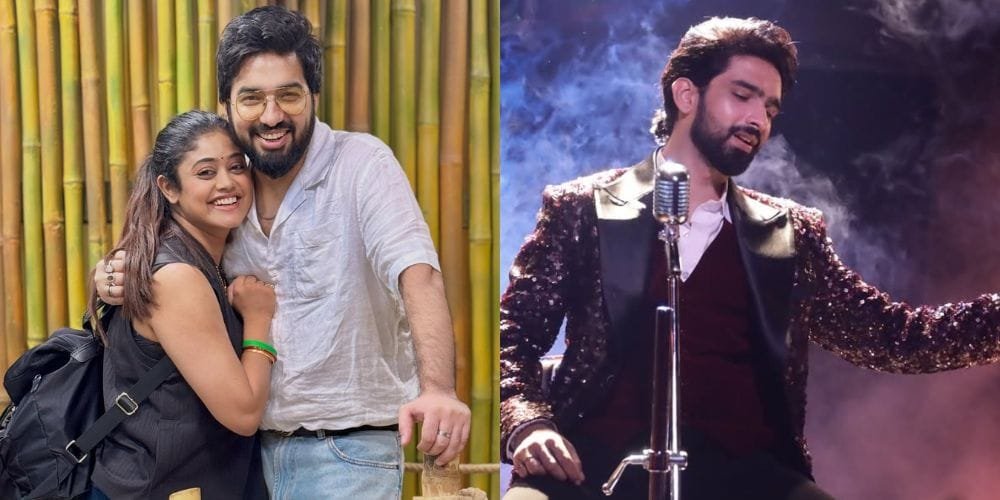
A major controversy has erupted in the Indian music industry as composing duo Sachet-Parampara fiercely rejected and publicly slammed composer Amaal Mallik over his repeated claims regarding the origin of their blockbuster song, “Bekhayali”, from the 2019 film Kabir Singh. The duo, composed of Sachet Tandon and Parampara Tandon, took to their official Instagram handle to share a detailed, strongly worded video, accusing Mallik of spreading false narratives and damaging their professional reputation.
The public confrontation marks a significant escalation in the dispute, which had been simmering since Mallik first suggested in a July 2025 interview that “Bekhayali” was inspired by, or somehow derived from, musical references he had previously shared with the film’s team. Sachet-Parampara not only dismissed the allegations as “completely false” but also displayed evidence to counter Mallik’s narrative, demanding a public apology.
The genesis of the controversy lies in Amaal Mallik’s statements that the final compositions for Kabir Singh, particularly the chartbuster “Bekhayali,” were created by tweaking or using the skeleton of his original compositions that he had submitted to the production team.
Mallik had claimed that:
- He was originally contracted to compose the full six-song album for the film, but his contribution was later reduced to just one track.
- He had sent musical references, or “blueprints,” on WhatsApp to the makers, and Sachet-Parampara allegedly used these references to create their tracks.
- He implied that industry favouritism allowed Sachet-Parampara, despite being relative newcomers at the time, to benefit from his original work while he faced a “heartbreak” in terms of working on the film.
These recurring claims, especially the suggestion that their work was not original, prompted Sachet-Parampara to finally break their silence with a public “expose” video.
In their viral Instagram video, Sachet-Parampara launched a point-by-point rebuttal of Amaal Mallik’s allegations.
1. Proof of Original Composition
Sachet Tandon and Parampara Tandon unequivocally asserted that “Bekhayali” was “purely a Sachet and Parampara original composition.” They stated that the entire process—including “every melody, every composition, every arrangement, every lyric”—was created during collaborative sessions in the presence of the whole Kabir Singh team, including actor Shahid Kapoor and director Sandeep Reddy Vanga. They claimed to possess complete chat records to prove the timeline and originality of their work.
2. Disputing Industry Favouritism
The duo strongly countered Mallik’s implication that they benefited from label favouritism. They clarified that, unlike Mallik who had been associated with T-Series since 2015, they were “complete outsiders” and had no prior association with the label before Kabir Singh. Sachet Tandon questioned why, if they were outsiders, they would be shown another composer’s work only to “steal” it.
3. Exposing Congratulatory Messages
The most compelling evidence presented by Sachet-Parampara were screenshots of alleged WhatsApp messages from Amaal Mallik himself. They revealed that Mallik was the first to text Sachet after the song’s release, congratulating them on the track’s success and expressing that he was “waiting for your song.” They questioned why Mallik would send congratulatory messages if he genuinely believed the song was stolen from him.
Concluding their emotionally charged video, Sachet-Parampara demanded that Amaal Mallik issue a formal public apology. They argued that his repeated public statements without proof had “damaged our reputation” and affected their mental peace.
“We want an apology from you, and in public, because you went outside. You went on your social media, asking and telling all these things,” Sachet Tandon stated firmly.
The duo also issued a clear warning, stating that they were prepared to pursue legal action if Mallik did not retract his claims and publicly apologize, emphasizing the need for truth and fairness in an industry where accusations can quickly tarnish careers. The video has sparked widespread debate among fans and industry peers regarding the ethics of creative credit and professional conduct.